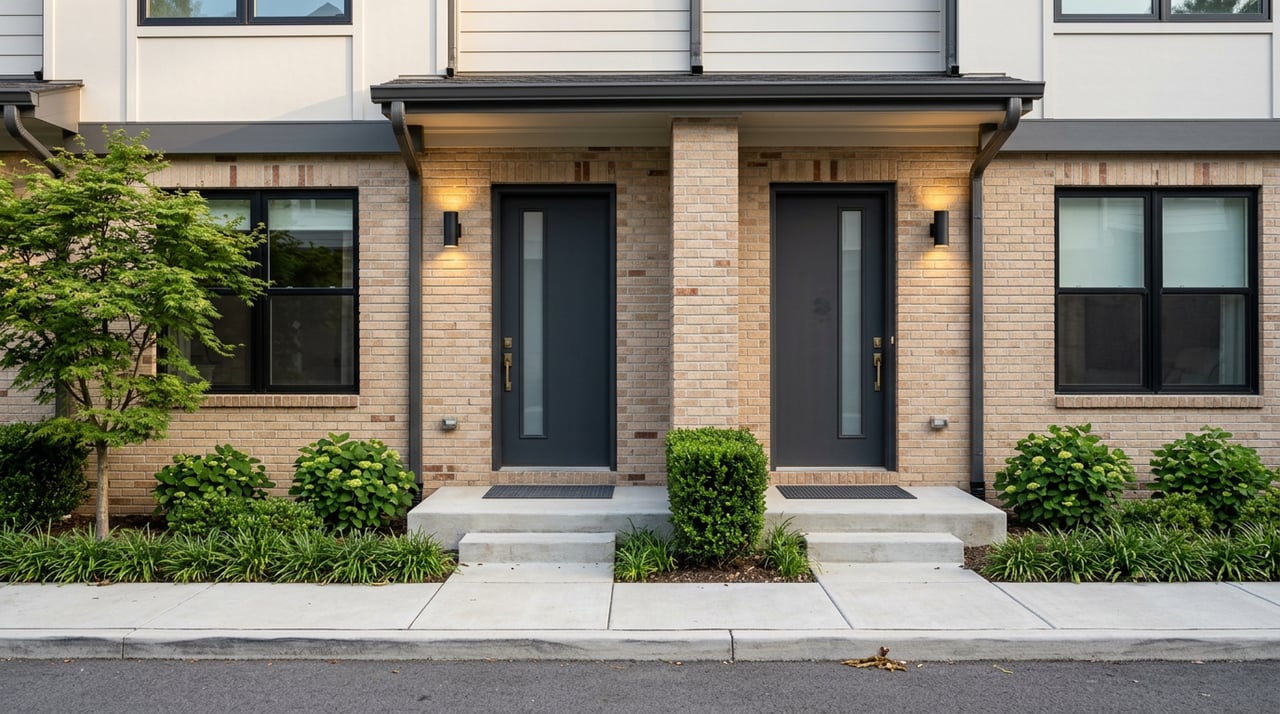
Trying to choose between a townhome and a single-family home in North Fulton? You are not alone. The right answer depends on how you want to live, what you want to spend each month, and where you want to be on the GA-400 corridor. In this guide, you will compare costs, maintenance, commute, and long-term value so you can move forward with confidence. Let’s dive in.
Quick buyer profiles
Busy professional: Townhome fit
- You value walkability and short errands near mixed-use hubs like downtown Alpharetta, Avalon, or Halcyon.
- You want lower weekend maintenance and predictable costs through an HOA.
- You are comfortable with a smaller private yard or none at all and a vertical layout.
Growing household: Single-family fit
- You want a private yard, more storage, and flexible space for hobbies, pets, or future additions.
- You are open to more maintenance responsibilities and possibly higher total ownership costs.
- You value neighborhood privacy and access to parks and larger lots.
Empty-nester: Right-size options
- You may prefer a lock-and-leave townhome near shopping and dining, or a smaller single-family home with a manageable yard.
- You want fewer maintenance surprises and predictable monthly expenses.
- You are thinking about resale appeal to the next likely buyer group.
North Fulton at a glance
North Fulton typically refers to the arc of suburbs north of central Atlanta, including Alpharetta, Johns Creek, Roswell, and Milton. This area anchors major jobs and retail along GA-400 and is often discussed together in local planning and economic coverage. For context on the area’s distinct identities and growth, see this North Fulton overview.
City-level price snapshots can vary by data provider and date, and neighborhood micro-markets can differ a lot. In general, townhomes in North Fulton often show a lower total purchase price but a similar or higher price per square foot compared to detached homes. That is because townhomes tend to be smaller and located in walkable mixed-use pockets, while single-family homes command premiums for land and private yards. When you get serious, pull current numbers for your target zip code and school cluster at the time you shop.
Ownership costs
HOA fees and coverage
- HOAs are common across newer developments. National research shows roughly 41% of for-sale homes carry an HOA fee and a median fee around $125 per month. Many North Fulton townhomes run higher due to amenities and exterior coverage.
- What HOAs often cover for townhomes: exterior building envelope, roof and paint on attached walls, common-area landscaping, trash, amenities, and reserves. Single-family HOAs vary. Some cover limited landscaping or amenities only.
- Some communities have a master association plus a sub-association that layers dues. See how layered dues work in the Windward master association example.
What to confirm before you buy:
- What exactly does the HOA maintain versus what you maintain?
- Current monthly dues and any special assessments.
- Reserve study, last 2 to 3 years of financials and board minutes.
- Insurance requirements and master policy details, including loss assessment coverage.
- Rental caps, pet rules, parking, and architectural guidelines.
Maintenance budgeting
A simple rule of thumb is to budget about 1% of home value per year for routine upkeep. On a $700,000 property, that equals about $7,000 annually. Townhome owners still cover interiors and systems, but the HOA may reduce your direct spend on exterior items that it maintains. Detached homeowners should plan for yard care, roof, exterior paint, hardscaping, and larger systems over time. Get community-specific estimates before you finalize your budget.
Property taxes in Fulton County
Georgia calculates taxable value at 40% of market value before exemptions, and total bills include county, school, city, and any special districts. Fulton County’s general-fund millage was held at 8.87 mills for 2025. For a simple illustration, a $700,000 market value has a taxable value of about $280,000. The county general-fund portion at 8.87 mills would be roughly $2,484 per year. Your final bill depends on your city and school millage and commonly lands in the low-to-mid 30s mills. Always verify the latest rate on the county site and ask for the property’s last tax bill. Read the county’s notice on millage here: Fulton County millage overview.
Insurance differences
- Many attached communities carry a master insurance policy. In these, you often carry an HO-6 policy for your unit’s interior finishes and contents while the association’s master policy covers the structure.
- Fee-simple townhomes and detached homes often use an HO-3 policy, which covers the structure, other structures, and personal property.
- Coverage type affects premiums and claims exposure. Ask your agent to review the association’s master policy and your policy requirements. For a clear primer on townhouse insurance basics, see this HO-3 vs HO-6 overview.
Lifestyle and location
Yard and interior space
Townhomes trade private yard area for lower total price and reduced maintenance. Expect vertical layouts and fewer exterior expansion options. Single-family homes typically offer larger yards, more storage, and the flexibility to add on, install a pool, or rework outdoor living spaces.
Walkability and amenities
New townhome product often clusters near mixed-use districts like downtown Alpharetta, Avalon, and Halcyon. If you prioritize restaurants, gyms, and fast errands, townhome living can be a strong fit. Single-family neighborhoods tend to be quieter and more private, with parks and larger green spaces nearby.
Commute and GA-400
North Fulton sits along the GA-400 corridor, home to major tech employers, medical campuses, and professional services. Many residents work within Alpharetta and Johns Creek, while others commute to Perimeter, Buckhead, or Midtown. Traffic on GA-400 can vary, and ongoing projects are an active planning topic. For context on the corridor and its role in local mobility and jobs, see True North 400’s corridor update.
Tip: When you shortlist homes, map peak and off-peak drive times from each property to your job center and usual destinations.
Schools and your search
Public school clusters are an important driver of demand in North Fulton, and private-school options are also available. Ratings vary by specific campuses. When comparing homes, look up the current assignment and recent performance for the exact address rather than relying on citywide generalizations. For broader market context on what drives value in Metro Atlanta, review this local market analysis.
Financing and resale
When condo project approval matters
Some attached communities are legally structured as condos. These may require a project-level review to qualify for certain conventional loans. Lenders use tools like Fannie Mae’s Condo Project Manager to confirm eligibility. Before you fall in love with a unit, ask your lender and agent to check:
- Is the project treated as condo or fee-simple townhome?
- CPM or PERS status, if applicable.
- FHA approval, if you need an FHA loan.
- Owner-occupancy ratio and any litigation or budget issues.
Fee-simple townhomes that are treated like single-family homes are usually simpler to finance, but always confirm early to avoid surprises.
Resale and long-term equity
Detached homes often capture a larger share of land value, which can support long-term appreciation. Townhomes can appreciate strongly too, especially in constrained, walkable locations with healthy associations. Results vary by neighborhood supply, association health, and nearby new construction. Compare recent 3 to 5 year trends for your short list rather than relying on national averages. This market overview highlights many of the drivers that influence North Fulton values over time.
Monthly cost example
Below is a simple illustration of non-mortgage housing costs. Use your lender’s quote for principal and interest.
Hypothetical Single-Family at $700,000
- Property taxes: Taxable value ≈ $280,000; combined millage often totals in the low-to-mid 30s mills. That places annual taxes roughly in the $9,200 to $10,360 range, or about $770 to $863 per month. Verify the exact amount for the parcel.
- Insurance: HO-3 policy. Get a carrier quote based on the home’s specs.
- Maintenance reserve: About 1% of value per year ≈ $7,000, or ~$583 per month.
- HOA: $0 to community dues, if applicable. Confirm exact amount and coverage.
Hypothetical Townhome at $600,000
- Property taxes: Taxable value ≈ $240,000. Using the same combined millage range, annual taxes may land roughly in the $7,920 to $8,880 range, or about $660 to $740 per month. Verify for the specific address.
- Insurance: HO-6 policy if there is a master policy, or HO-3 if fee-simple with owner-responsible structure. Get a quote and confirm the HOA’s master policy.
- Maintenance reserve: About 1% of value per year ≈ $6,000, or ~$500 per month. Some exterior items may be funded by HOA dues rather than your reserve.
- HOA: Many townhomes run in the $100 to $400 per month range, depending on amenities and services. Confirm current dues and any special assessments.
Note: These are illustrations, not quotes. Always pull the county tax portal, the property’s last tax bill, and actual insurance and HOA documents for precise budgeting.
HOA document checklist
Use this to compare communities side by side.
- Declaration, bylaws, rules, and recent amendments
- Current dues and all layered assessments (master and sub-association)
- Reserve study and most recent budget
- Last 2 to 3 years of financials and board minutes
- Master insurance policy, coverage limits, and deductibles
- Rental caps, pet policies, parking, and architectural controls
- Maintenance map: who handles roofs, exterior, windows, decks, and landscaping
Putting it together
If you want convenience near restaurants and lower weekend maintenance, a townhome near North Fulton’s mixed-use hubs can be an excellent fit. If you want a yard, storage, and room to grow, a detached home may deliver the space and long-term equity you prefer. The best choice is the one that matches your daily life and total monthly budget.
When you are ready to compare specific addresses, lean on local guidance. Our team will help you model monthly costs, review HOA documents, confirm financing paths for attached homes, and map commute and school considerations so you can buy with clarity. If you need to sell first, we can also help you prep your current home using brokerage-enabled programs for a polished launch.
Ready to take the next step? Connect with The Kinnebrew Group for a clear, local plan tailored to your goals.
FAQs
What are the biggest cost differences between North Fulton townhomes and single-family homes?
- Townhomes often have lower total price but add HOA dues; insurance may be an HO-6 policy if a master policy exists. Single-family homes usually have higher maintenance and an HO-3 policy, and may or may not have an HOA.
How do HOA fees impact my monthly budget in a townhome?
- HOAs can shift exterior costs like roof, siding, and common landscaping into a monthly fee. Review financials, reserves, and coverage so you know what you still pay out of pocket.
Will a townhome be harder to finance than a house?
- If the community is legally a condo, your lender may need to confirm project eligibility using tools like Fannie Mae’s Condo Project Manager. Fee-simple townhomes are often treated like detached homes for financing, but verify early.
How should I compare property taxes across North Fulton cities?
- Start with Georgia’s 40% assessed value rule, then apply the combined millage for the specific city and school district. Pull the county portal and ask for the last tax bill for each address.
Which option typically holds value better long term?
- Detached homes often benefit from land value, while townhomes can appreciate strongly in walkable, supply-constrained areas. Compare recent 3 to 5 year trends for your short list and review association health.
What insurance do I need for a townhome?
- If the HOA carries a master policy, you likely need an HO-6 policy for interiors and contents, plus loss assessment coverage. Fee-simple townhomes may need an HO-3 policy similar to detached homes. Confirm with the HOA and your insurer.